
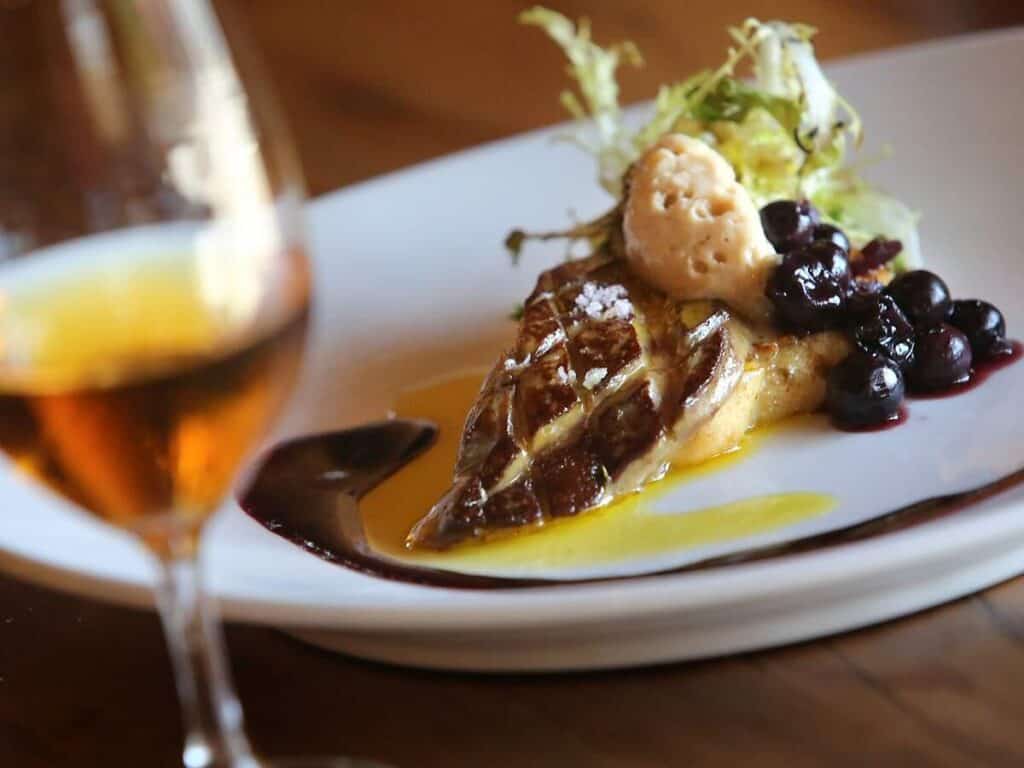
Foie gras comes in different forms, depending on its preparation and cooking method.
1. Fresh Foie Gras (Foie Gras Cru)
• Raw, uncooked foie gras
• Usually sold as a whole lobe (duck or goose liver)
• Used for pan-searing, roasting, or making terrines and pâtés
• Highly perishable and requires proper handling
2. Semi-Cooked Foie Gras (Foie Gras Mi-Cuit)
• Partially cooked at low temperature (around 90°C / 195°F)
• Retains a creamy, soft texture and rich flavor
• Usually sold in vacuum-sealed packages or jars
• Best served chilled, sliced, on toasted bread
3. Fully Cooked Foie Gras (Foie Gras Entier or Conserve)
• Cooked at higher temperatures (100–110°C / 212–230°F) and preserved
• Comes in jars, tins, or cans with a long shelf life
• Can be stored at room temperature until opened
• Smoother texture, slightly firmer than mi-cuit
4. Foie Gras Terrine & Pâté
• Terrine: Made from foie gras that is seasoned, cooked slowly in a mold, then chilled and served cold
• Pâté: A spreadable mixture of foie gras blended with other ingredients like cream, truffles, or spices
• Served on toast or crackers as an appetizer
5. Bloc de Foie Gras
• Emulsified and molded foie gras, often mixed with small pieces of liver
• Smoother and more uniform in texture than whole foie gras
• Comes in cans or jars, making it more affordable than whole foie gras
6. Duck vs. Goose Foie Gras
• Duck Foie Gras (Foie Gras de Canard): More common, slightly firmer texture, robust and earthy flavor
• Goose Foie Gras (Foie Gras d’Oie): More delicate, buttery, and refined in taste
The best types of foie gras for different dishes and preparations:
- Seared Foie Gras (Pan-Seared Method)
This is one of the most popular ways to serve foie gras:
Ingredients: Use Fresh Foie Gras (Cru) Fresh
Best type: Raw duck foie gras (Grade A) for a firm texture that sears well.
Why? Duck foie gras has a slightly stronger flavor and holds its shape when pan-seared. Goose foie gras is more delicate and can melt too quickly.
Pair with: Sweet fruit reductions (fig, apple, or berry compote), balsamic glaze, or toasted brioche.
Optional: salt and freshly ground black pepper
Instructions:
1. Chill the foie gras: Keep it in the fridge until just before cooking to maintain its firm texture.
2. Slice carefully: Cut into ½-inch thick slices using a sharp knife. To prevent sticking, warm the blade in hot water and wipe it between cuts.
3. Season lightly: Sprinkle both sides with salt and pepper just before cooking.
4. Sear in a hot, dry pan: Heat a non-stick pan over medium-high heat. No oil or butter is needed—foie gras releases its own fat.
5. Cook briefly: Sear for 30–45 seconds per side until a golden-brown crust forms. Be careful not to overcook, as foie gras melts quickly.
6. Drain excess fat: Place the cooked foie gras on a paper towel to absorb excess fat before serving.
For Foie Gras Terrine (Mi-Cuit or Entier Method)
Ingredients:
• Use Foie Gras Mi-Cuit or Foie Gras Entier
• Raw foie gras (whole lobe)
• Best type: Goose foie gras (for a smoother, buttery texture) or duck foie gras (for a more pronounced taste).
• Why? Mi-cuit foie gras is already partially cooked and easy to prepare, while foie gras entier gives an authentic texture.
• Pair with: Toasted baguette, sea salt flakes, black pepper, and Sauternes wine, or Salt, pepper, and sugar
• Optional: Cognac, Armagnac
Instructions:
1. Clean the foie gras: Remove any visible veins using tweezers or a small knife.
2. Marinate (optional): Season with salt, pepper, and a splash of Cognac or Sauternes, then refrigerate overnight.
3. Cook gently: Place in a terrine mold and cook in a water bath at low temperature (90–100°C / 195–210°F) for about 30–40 minutes until it reaches an internal temperature of 46–50°C (115–122°F).
4. Press and chill: After cooking, press it lightly with a weight, cover, and refrigerate for at least 24 hours before serving.
Foie Gras Pâté
• Use Bloc de Foie Gras
• Best type: Bloc de foie gras (a smooth, emulsified version of foie gras).
• Why? Bloc de foie gras spreads easily and is more affordable than whole foie gras.
• Pair with: Crackers, cornichons, or a light salad.
Gourmet Sandwich or Burger
• Use Foie Gras Mi-Cuit or Seared Fresh Foie Gras
• Best type: Duck foie gras for its firmer texture and bold flavor.
• Why? It adds a rich, umami taste to sandwiches or gourmet burgers without overpowering other ingredients.
• Pair with: Brioche bun, caramelized onions, and black truffle aioli.
Foie Gras Canapés or Appetizers
• Use Foie Gras Terrine or Bloc de Foie Gras
• Best type: Foie gras terrine or bloc de foie gras for easy slicing and spreading.
• Why? These options are already prepared and require minimal effort to serve.
• Pair with: Toasted bread, fruit preserves, and Champagne.
How to Serve Foie Gras
• For seared foie gras: Serve hot, on toasted brioche or a warm plate, with sweet accompaniments like fig jam, apple compote, balsamic reduction, or a drizzle of honey.
• For terrine or pâté: Serve cold, sliced thinly, on toasted bread or crackers. Garnish with sea salt, black pepper, or truffle shavings.
Wine Pairings
• Sauternes (classic choice) – A sweet French wine that complements the rich, buttery texture.
• Late-harvest Riesling or Gewürztraminer Vino Santo Trentino– Balanced sweetness and acidity.
• Champagne or dry white wine – For a crisp contrast to the richness.
• Pinot Noir – A light, fruity red that pairs well with foie gras in savory dishes.